Surviving (and Thriving) on Your First Day as an Executive Assistant

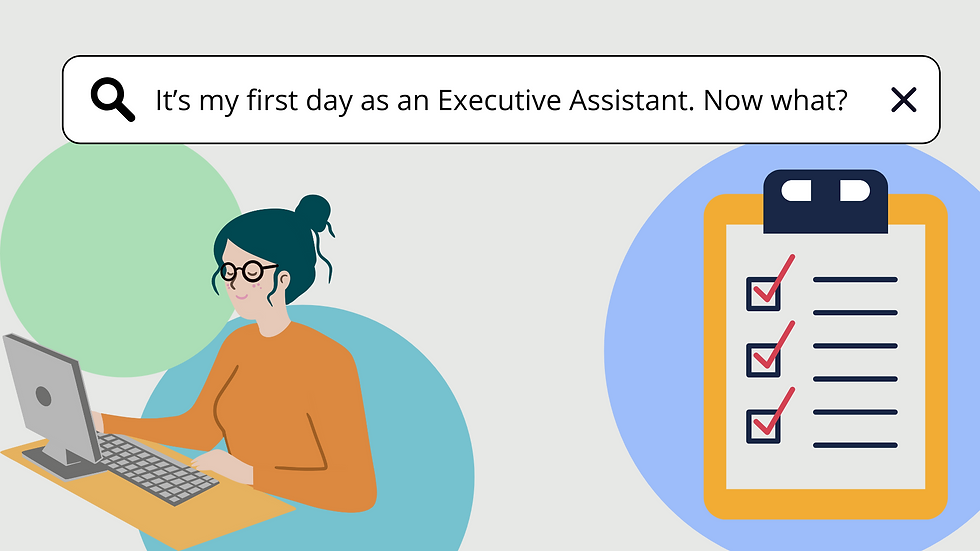
So... it’s your first day as an Executive Assistant. Now what?
You’ve read the job description (twice). You joined the Zoom call on time. You’ve smiled, nodded, taken notes and now you’re sitting there wondering, “What exactly am I supposed to do?”
First days can feel like a blur. Especially in remote roles, where there’s no office tour or desk setup. But here’s the truth: how you approach Day 1 can set the tone for your success, even if the company doesn’t have the perfect onboarding plan.
Step 1: Don’t wait, ask
Many new assistants feel they should wait quietly for instructions. But this isn’t a passive role. You're here to take initiative. That means asking smart, open-ended questions like:
“What does success look like for this role in 30/60/90 days?”
“Is there a preferred way to organize tasks or manage priorities?”
“Can you share examples of how your past assistant helped you the most?”
Step 2: Start building your own playbook
Even if no one gives you SOPs or guidelines, you can start documenting everything you learn, logins, tools, preferences, meeting rhythms, key contacts. This will become your personal onboarding guide, and later, your first internal asset.
Tip: Use Notion, Google Docs, or even a simple spreadsheet. It doesn’t need to be fancy, just clear and accessible.
Step 3: Learn how your executive thinks
Every leader has a unique way of making decisions, responding to stress, and communicating. Pay attention to their tone, energy, and feedback. Ask questions like:
“When you say urgent, do you mean today or now?”
“Do you prefer summaries or full details in updates?”
“What frustrates you most in a workday?
These insights will help you anticipate needs and avoid friction.
Step 4: Define your “quick wins”
In your first week, focus on 1–2 small wins that make your executive’s life easier:
Clean up their calendar
Organize a folder with key docs
Summarize inbox threads they’ve missed
Document a repeated process they haven’t had time to fix
Don’t try to do everything. Just aim to be helpful intentionally.
Final Thoughts
Being an assistant means thinking ahead, acting with purpose, and never being afraid to ask, “How can I make this easier for you?”
Your first day won’t be perfect. But if you show up with curiosity, clarity, and confidence, you’ll already be 10 steps ahead.
BONUS: Download a First-Day Assistant Checklist
I put together a free checklist with essential first-day questions, tools to organize your notes, and a few mindset tips to help you feel grounded.
Want help becoming a more organized and empowered assistant?
I’m building a library of resources to help assistants take ownership of their role and support their teams like a pro.Feel free to contact me on LinkedIn or send me a message below, I’d love to connect.



Comments